Wednesday, June 27, 2012

Julia Holter - Ekstasis

Sample the Album

Amazon is kind of like that drunk friend whose waaaaaay too into music, tossing suggestions at you with only the vaguest of guidelines and a misguided sense of altruism. They know about so much music at once, that any suggestions are destined to be too broad to make much sense. A little sense, but not much.  Oh, you like the Pretenders? You might like Aerosmith, too. Oh, you like Aphex Twin? You might like Slipknot, then. Oh, you like My Bloody Valentine? You'd probably like ABBA. If you think Siouxsie and the Banshees are good, just wait until you hear KISS!!!

Those are all real suggestions I've gotten from Amazon. I don't fucking know, either.

Most comparisons aren't logical in any immediate way, but hell if Amazon doesn't claw and scratch to connect those oh-so-distant dots. Of course, blind chance has to win out eventually (based on the law of averages) and, if only briefly, the website finds its moments of triumph.  Every now and then, Amazon haphazardly delivers up a gorgeous suggestion that falls right in line with your particular taste. One that recently befell my "Recommended for You" page was Julia Holter's Ekstasis.

If you can imagine a fancy arisocrat's hedge maze, complete with classical statues and ornate fountains, sporadically being dragged into a deep black vortex, then you sort of have an idea of how Ekstasis plays out. It's an album that finds a strange grace in the chaos of vocal samplers and stream of consciousness song structures. You can tell that Holter enjoys the austere beauty of an ambient soundscape, but she also likes to chide and tease every once and a while.

In a sense, Holter is the fanciful young woman you find yourself playfully chasing through the hedge maze. Statues float by and crumble in her wake and ghostly versions of the singer appear randomly, her gentle vocals sweeping past in every direction. The album's enigmatic opener, "Marienbad" unfolds like a chamber choral performance, swirling organ and Holter's overdubbed vocals filling in the empty spaces. The lyrical content, as glib as it is, most likely references Last Year at Marienbad, a classic French New Wave film (one I personally hate) about a couple at a chateau comparing themselves to statues: "I can hear a statue/wonder why they're so still/all day in the garden", at least, I think that's what she's saying. It's hard to tell throughout much of the Ekstasis, because, as I said, Ms. Jules likes to be a bit of cheek. The way she cuts herself off and allows her overdubs to float up to the surface is her way of grinning widely and saying, "I dare you to read into this."

"In the Same the Room" is pretty much the closest thing to a traditional "pop" song Ekstasis has to offer and even then, Holter makes sure to loosen the reigns and see where her subconscious garden may take her. It may start out with a meditative organ and straight-ahead drum machine, but the structure is slashed with flourishes of her angelic overdub and briefly careens off the cliff into a plume of whistling and vibraphone.

Of course, her sense of humor and beauty shines the brightest on "Goddess Eyes I". The song is a vocorder mantra of sorts - Holter's effects-laden vocals wavering through like a depressing future Calvin Klein ad stuck on repeat, "I can see that the eyes are not alive to cry". The singer soon adds unfiltered vocal booms to extend the melody out in a strangely exciting way, showing that she has a rueful credence for the decorum in her hedge maze. The inevitability of the black vortex entices her, but the defacement of the garden disturbs her all the same.   

It all works because the album isn't really about cohesive narratives or well-articulated ideas, as much as it's about the feelings and placement her music puts you in. Her strung-together phrases and helter skelter synthesizer arrangements evoke an amorphous sense of calm (like any good ambient) but also inscrutable mystery. Holter's lure into the hedge maze of Ekstasis may be forboding, but amidst the tall green walls, stone gazebos and Greek statues that litter the garden, there is always a presiding serenity. The singer wants you to embrace the vortex, but to never let go of your bearings.

Sunday, June 3, 2012

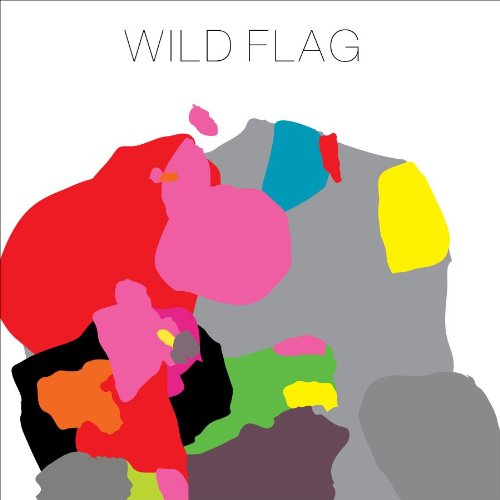
Wild Flag - Wild Flag

 Sample the Album

If you're looking for the musical equivalent of four howling women on a mean, smoke-pluming bulldozer, blasting through house and storefront alike, Wild Flag is a band for you. Their self-titled debut is both a soul-shaking and oddly tender experience that leaves you constantly scanning the horizon for the band's next swing around on their audio-dozer express. It's an energy that few bands these days can seem to match - not just in the powerful growl of their guitars or the reckless tempo shifts or the schizophrenic vocal delivery, but in the way these ladies apply the intricacies of melody, invention and texture.

Featuring a line-up of '90s indie rock darlings (Sleater-Kinney, the Minders and Helium) the ladies of Wild Flag are well-practiced in their craft. After years of juggling projects, shifting members, forays into other media (Carrie Brownstein and Portlandia), Wild Flag finally emerged from the chaos back in 2011, with a record to match. The immediacy and, perhaps desperation, felt on their debut points to a sense of ultimate release, a sonic boom of creative energy that had been building up for years and years.

The opening blast of love-struction, "Romance", sets the tone quite nicely. With it's slightly detuned guitar chords jittering on and off, singer/guitarist Brownstein offers a rubbery barrage of earnest desires and admissions. Though it's never clear who she's talking about, she is singing in the personal "my" but also the collective "we", so you get the sense that the band was in full support of the song's message. She sings lines like , "Hey, you fill up the spaces, those empty places/the corners and cracks/you kill my sickness, my only witness/you're all that I have" and "We love the sound, the sound is what found us/sound is the blood between me and you". For me, "Romance" stands as a defiant optimism for love in the face of an increasingly cynical world, with music to glue us together. Or just loving music. Or both. I can definitely get behind any of those sentiments.

"Something's Come Over Me" tones things down just a little bit, shifting their dozer into second gear, with measured guitar notes and singer/guitarist Mary Timony's gentle, reassuring delivery. Timony sings of anxiety, "Something's coming over me/got a fever now/I can't breathe" and "Let me ask your advice/if I fall once/will I fall twice?", with music to cure what ails, "Oooh, oooh, oooh, I hear you comin' through my stereo". The song is quickly followed by a hard thrust forward into "Boom" and the stop-start epicness of  "Glass Tambourine".

Throughout the album, you can tell the ladies atop their bulldozer are choosing their targets carefully. Once sighted, it's only a matter of choosing whether to crush it with love, cheekiness or resentment. Sometimes all three at once. "Future Crimes", with it's distorted keyboard melody, yearns for an end to some severe hypocrisy. Brownstein wails over and over, "if you're gonna be a restless soul/then you're gonna be so, so tired/if you're gonna give up on this fight/then i'm gonna call you a liar", cementing the idea that the band, despite their rip-roaring veneer, can be achingly sincere. "Racehorse" is a great use of humor to critique the pitfalls of greed. With a smart-assed confidence, Brownstein sings, "I'm a racehorse/yeah, I'm a racehorse/put your money on me", followed by a purposefully crass chorus, "we're in the money, we're in the money".

The band see's no point in making their delivery any different, regardless of the sentiment behind it. Every emotion is a force to be reckoned with. Perhaps the song that best encapsulates this is "Short Version". From the off-hand guitar flourishes to the intense drum fills, you can tell the ladies are cackling loudly as they doze around, kicking their legs off the side in joyful reverie of their destruction. Brownstein yowls off enigmatic phrases like, "Inside this stillness is a wave/a force from which we cannot be saved" and "Inside this heaven is a hell/under this fever we are well".

Eventually, one of the guitars gets stuck on a particularly juicy chord, repeating it over and over, as the other begins to fly high, arpeggiating notes until the cows come home. The band yells in unison, "Okay! Alright!", bringing this soiree of pure energy to it's boiling point. Wild Flag's audio-dozer has shifted to full speed and you can't help but gleefully hang on for dear life. And that's true of the entire album. It's a rough, gratifying ride through the passions of life, navigated by earnest and vibrant women. That's a trip I will gladly take for years to come.

Monday, May 14, 2012

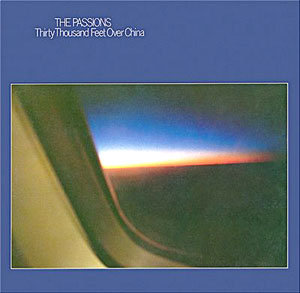
The Passions - Thirty Thousand Feet Over China

Sample the Album

Music from the far corners of the past can surprise you. That is, if you're willing to seek it out. I was reminded of this lesson, when I discovered The Passions last week. I had come upon them by chance, finding their name relegated to a "similar artists" list for Siouxsie and the Banshees on All Music Guide. Scrutinizing the list and listening to some of the other bands, my hope was fading that I'd find a diamond in the rough. The list was populated by bands I either already knew about, or bands whose mediocrity was equal to their obscurity.

It's funny, because in situations like that, where you don't have much prior knowledge to go off of, your criteria for further investigation becomes strangely superficial. Sometimes I won't even click on the link to a band page just because I don't like their name. It's almost like the name itself is wasting my time - which is totally stupid - but that's exactly how I feel. Luckily, The Passions is an endearingly simple name for a band, so I overcame my ignorance and jumped right in to their discography.

I was immediately struck by Thirty Thousand Feet Over China, when I first fired it up on my computer. Cascaded with chorus-slather, echoing guitar and the cloudy vocals of Barbara Gogan, the album is akin to jogging through green mist, down a constantly undulating indoor gym track. The album has a silky, herky-jerk propulsion throughout, where smooth guitar notes float over a rhythm section that sticks fastidiously to reverse-engineered funk. It sounds like the typical recipe for a post-punk pasta, but The Passions pull themselves above most of their contemporaries by simple virtue of cohesive musicianship and energy.

"I'm in Love with a German Film Star", which was the band's one hit before disbanding, opens with some of the richest guitar chords you'll ever hear in your life. Gogan sings, "I'm in love with a German film star, I once saw in a bar/sitting in a corner and in perfect clothes/trying not to pose/ for the cameras and the girls", making no bones about the ridiculousness and inevitability of celebrity obsession. On "The Swimmer", the band misdirects with a slow build, muted guitar echoes and reverse snare splashes, which give way to a rapid guitar flourish. The drums and bass are dragged in tow, while Gogan moans so smoky and rich over the top of it all.

There's a presiding sense of controlled experimentation and indulgence throughout Thirty Thousand Feet Over China. You can hear it chattering on the reverse snares and elongated jam of "Small Stones". You can hear it squeal in the synthesizer highlights of "Runaway". You can hear it sway in the echoed percussion and the flange-muffled tremolo of the guitar on "Skin Deep". You can hear it mince up songs at the beginning and toss songs off at the end. It's a looseness that feels right. Since The Passions' music is a fundamental mix of smooth and groove, any probes into studio trickery are welcome eccentricities, rather than tedious subversions of pop song craft like many other post-punk acts.

Thirty Thousand Feet Over China is not going to change your life or set your ears on fire, but it is a solid album by a band largely forgotten by time. In many ways, the album is a sort of foamy, midnight lullabye, where even the expression of anxiety or disenchantment sound like sweet little nothings in the ears. The Passions may ask you to jump aboard the mood-train, but their skill at constructing songs and weaving in gentle melodies keeps your perspective sober. Overall, the album is a very fine effort that speaks directly to how unfair the amnesia of music culture and history can be.


Friday, April 6, 2012

Pizzicato Five - Made in USA

 Sample the Album

Pizzicato Five were one of those groups that consistently put out solid albums, yet never went out of their way to create a record of pure ecstasy. In a sense, you could say they managed their creative pizza well, dividing pieces equally across the table - years and years of decent albums, rather than making one or two amazing albums and foddering the rest.

There is a sense of exuberance that has been touched upon by several Japanese music artists from the '90s onward, but none do it quite as cool as Pizzicato Five, and Made in USA is a decent form of proof. It is Matador Records' first compilation of singles and other outstanding tracks pulled from the group's mass career in order for them to properly become acquainted with the U.S. The group's jet-setting '60s image and sound-collage-meets-drum n' bass-bossa-nova style are so effortlessly presented on Made in USA, that even the most heart-hardened listeners would have trouble not cracking a smile at the charm and glitz of it all.

The compilation opens with a breezy jazz shuffle, "I", that instantly transports you to a high-fashion club in swinging '60s Tokyo. Amidst a playful flute and snare swishes, singer Maki Nomiya provides anxious vocal melodies. You can tell she's ready to kick this groovy little set list off with a bang. As the album shimmies forward, the club shifts rapidly into the future and back to it's respective present, snatching up technology and music trends all over the place. "Magic Carpet Ride" introduces a cheerful middle-eastern flavor - synth flute wrapping itself around an electronic drum beat as Nomiya expresses some sweet idealism, "everyday we'll love together/we can make it last forever/ magic carpet ride/magic carpet ride".

"Readymade FM" offers a brief collage of radio jargon and background music, fading quickly into the saccharine chimes of "Baby Love Child". I would argue that "Baby Love Child" is one of Pizzicato Five's best songs, if not THE best. Woven into a measured acoustic guitar, an endless drum loop and punctuating xylophone, the song is a surprising evocation of affection. Nomiya's gentle delivery, which shifts between English and Japanese, is the icing on the sentiment cake, with lines such as "When we kiss, I see what's in your heart/you love me, yes you do/you don't need to tell me", outlining the one-two gooey punch, "we are in love, baby love child/I take you so high, baby love child/give me a kiss, baby love child". It's a song that makes you misty and nostalgic in the best way possible - hell, they even used it at the bittersweet ending of the Futurama episode where Leela first finds out about her true origins.

Made in USA is about possibility and positivity - ideologies that Pizzicato Five championed throughout their entire career. For them, music was both a cure for the soul that ails and a statement of nostalgic fashion as new-found empowerment. Made in USA exemplifies these ideas. It's a radio dial of effervescence - whether you find comfort in the intimate Japanese dialogue of "This Year's Girl #2", chill out to the cool blue groove of "I Wanna' Be Like You" or flail around to the celebratory bombast of the popular single, "Twiggy Twiggy-Twiggy vs. James Bond" - it's a ready-made sound collage of the most adorable proportions.

To some ears, Pizzicato Five may seem ham-fisted and corny. Made in USA is not going to completely convince them otherwise, but it may just give them pause. Being a compilation, the record does suffer from a lack of continuity, even within the typically disparate aesthetics of the group. "Sweet Soul Revue"  and "Go Go Dancer" tread a little to close to the chin with their overblown horn sections and flat song structures. However, it's not enough to sink the ship. The brightest moments of Made in USA send the compilation to the stars, encouraging anyone who is curious about Pizzicato Five to gleefully peruse their back-catalog.

Thursday, March 8, 2012

Siouxsie and the Banshees - The Scream

Sample the Album

When you think about the world of down and dirty classic punk, you think of bands like The Sex Pistols, The Ramones, Patti Smith, The Buzzcocks, The Cramps, The Slits, The Clash, Iggy and the Stooges and so on. You don't necessarily think of Siouxsie and the Banshees. Siouxsie Sioux is usually pegged as the dark princess of theatrical goth rock (with a fingernail constantly swirling in post-punk), a label with total and undeniable merit. That is, except for her very first record, The Scream.

Before Siouxsie and company started ordering black eye-shadow and high-volume hair products in bulk, they were part of the sweaty and exciting punk scene of mid-to-late '70s England. Most of Siouxsie and the Banshees' early output is extremely direct, rapid and snarling - there are only a few leanings into the crazed, garish twilight they would later come to embody. After breaking out with their hit single, "Hong Kong Garden", the band's early efforts would culminate on The Scream in 1978, a vividly ferocious debut album that personifies everything I've come to love about punk rock and NONE of what I hate about it.

For me, The Scream is more than just an album. The Scream is a tangible summation of the grit and irreverence that punk music had initially promised. It's all deep red madness with golden smoke around it. Listening to it unfold is like watching a hulking, feminine tiger stalk it's prey, gore it to pieces and then chew sumptuously on the entrails. The album opens with a primal chant ("Pure"), in which Siouxsie and her band mates exchange revelrous moans, overshadowed by a heavy and slowly recurring bass tone. The intentions have been made clear - you're entering the hunting grounds. The band kicks up immediately with "Jigsaw Feeling", a hot red set of needles that tear into the skull, all the while Siouxsie announcing an inevitable mental deterioration, "One day I'm feeling total/the next I'm split in two/my eyes are doing somersaults/staring at my shoes".

"Overground" maintains the animalistic nature of the album, but it's in a more measured, brooding fashion. The guitar stalks slow and alone in the intro, only joined by Siouxsie's shrill confidence and a booming set of tribal drums halfway into the song. It's followed up with  an inverted cover of "Helter Skelter" by The Beatles, which completely obliterates the original in terms of pure satisfaction and delivery. The band's version emerges out of the darkness, scattered bass notes and guitar screeches giving way to ragged energy. Siouxsie infuses the cyclical lyrics with an obstinate charm, like she's toying with her prey. She adds a very well placed swear, in the line "You might be a lover, but you ain't no fucking dancer", which pretty much trademarks the song solely for the band at that point in time.

There's a welcoming give-and-take when it comes to tempo changes across the album. Each song is basically a refresher for the last, giving The Scream infinite propulsion - you could literally listen to it back to back to back to back and never really tire of the succinct punk contained within. "Metal Postcard", with it's deranged bird-call guitar slides and the jittering chords of "Nicotine Stain" are another great example of this slow-to-fast alternation. "Metal Postcard" provides the punch, while "Nicotine Stain" provides the vigor.

Of course, it's Siouxsie Sioux's proud and defiant style that pulls everything through the looking glass. Her cautionary tales, examinations of human nature and all-out celebrations of the depraved push the nocturnal punk of The Scream into the territory of "unforgettable". She has this way of weaving evocative lyrics without handing everything over in exposition, sliding her vocals up or down as they hang on particular words. Passages such as "By hook or by crook/you'll be the first in his book/for an impaled affair" and "out of the frying pan/and into the fire/58th variety" on "Carcass" paint the imminent doom of some unlucky victim with just enough vivid description for you to fill in the spaces. On "Mirage", Siouxsie sings about the flat, relatively meaningless existence of sexual spectacle, particularly on TV, "I'm just a vision on your TV screen/just something captured from a dream", moving on to acutely describe the controlling nature of the spectator, "my limbs are like palm trees/swaying in the breeze/my body's an oasis/to drink from as you please".

When all is said and done, I feel that The Scream is so ferociously definitive that I'm glad the band (and it's rotating roster of musicians) went on to explore other arenas of music. Siouxsie and the Banshees could easily have burned out by clinging to their punk roots and producing some tired, sub-par albums along the way. Instead, they chose to evolve. The band didn't have a perfect track record thereafter, but their whirlwind career produced several fantastic records. The Scream is one of those records, and in my opinion, their very best. You can't tame it's animal style, and really, who the fuck would want to?


Thursday, February 23, 2012

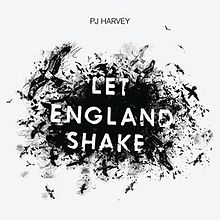
PJ Harvey - Let England Shake

Sample the Album

I have had a long-time crush on PJ Harvey and her music. In fact, once I get started, it's hard for me to shut the fuck up about how wonderful she is. The reasons PJ sits high, like a dominant queen, on my list of favorite artists are numerous: she's a raven-haired slink, a sexy cool lady with a huge mouth and a siren-call voice to match it, her equally self-effacing and empowered lyrics pull no punches, her employment of chunky guitar chords that constantly fold in on themselves is addictive, her shift from punk to blues to spindly folk is effortless, her everything, everything, everything.

It's not to say, in actuality, she's perfect and I just gobble up anything she dishes out, however. I've never quite understood the major wank-fest behind her third album, To Bring You My Love, an odyssey into an unscrupulous jazz/blues hybridization - all with a bit of dirty electronica thrown in to little avail. "Meet Za Monsta" is an interesting song, but it's not enough to save the experience. I've had similar feelings when listening to Harvey's work with John Parish. There's just not enough satisfaction in the songs or the concept, not enough pure PJ for my tastes.

So PJ can certainly do wrong in my precious ears, but it ain't likely. Her latest album, Let England Shake, ain't too wrong at all. It's a simultaneous send-up, sorrowful critique and love letter written to her homeland and, in particular, its troubled history. The album sounds like you are traversing the halls of an extravagant palace - the constant, echoing guitar like pristine white marble strewn across and throughout. Harvey is the downtrodden, wilting countess, showing you around sun-soaked courtyards and stately, gold-fringed rooms to paintings of England's proud loves, shamed atrocities, gorgeous landscapes and fervent loyalties. It's a distinct mixture of beauty and disgrace, and ultimately new political territory for Harvey to tread.

On the brass-punctuated, "The Last Living Rose", Harvey sings out matter-of-factly, "god damn Europeans/take me back to beautiful England", then goes on to describe her country with both wit and morbid effervescence, "and the grey, damp filthiness of ages/and battered books and/fog rolling down behind the mountains/on the graveyards and dead sea captains". Set to a translucent, rolling guitar strum, she mourns the terrors of war on "The Words that Maketh Murder", in the high-pitched moan she first adopted on White Chalk, singing, "I've seen and done things I want to forget/I've seen soldiers fall like lumps of meat" and "coming from an unearthly place/longing to see a woman's face/instead of the words that gather pace/the words that maketh murder".

Let England Shake is full of brutal irony and earnest misery, but Harvey does her best to keep things flowing, mainly by turning her history lessons into live demonstrations. The flow does taper a bit in the middle, especially during "On Battleship Hill" and "England", however, PJ's got a cure waiting around the corner with the intense guitar slide of "Bitter Branches" and the delicate piano ballad, "Hanging in the Wire".

Let England Shake is something that is obviously near and dear to Harvey. In an interview, she claimed that until recently she had never been confident enough to write politics and history into her lyrics, but had always wanted to. Perhaps now that she is older and has vented many of her past proximal demons, her liberation is complete. However, the evolution from deeply personal, raw narratives to expansive folk songs is definitely a major shift. Those who stick firmly to her ragged blue soul may find the album pretentious and beyond scope, but those who are willing to ride along on her artistic journey can find a lot to love about Let England Shake.

Friday, February 17, 2012

Charlotte Gainsbourg - Stage Whisper

Sample the Album

Although Charlotte Gainsbourg has increasingly embraced the world of acting in recent years, she still finds time to reconnect with her showbiz roots and, subsequently, cuts a fresh music album here and there. Gainsbourg isn't necessarily the brains behind these endeavors, but she does apply her trademark hush-tones to music orchestrated and arranged by more indie rock stars than you can shake a bag of glass at, including Jarvis Cocker, Air and Beck.

Her latest album, Stage Whisper, is actually left overs from her previous record, IRM, which was largely the baby of Mr. Two Turn-Tables himself. It's particularly ironic in my mind, because I felt the material on IRM was uninspired, sloppy and too crazy grab-bag eclectic for its own good. Stage Whisper seems much more concise and in control of it's destiny - almost as if someone grabbed Beck by the shoulders and said, "STOP IT", loudly, right into his deadpan face.

Stage Whisper has far more stark definition to it, roaming from burning midnight discotheques to old, crumbling ballet and opera halls full of reverb. Gone is the lackadaisical baroque electronica of IRM, and in comes its darker, bittersweet sister. I would actually even go so far as to compare this "odds and ends are better than the prime cuts" idea to Radiohead's Kid A and Amnesiac. Most folks tend to get all rah-rah for Kid A automatically, but I've always found myself drawn closer to the trickled down bits of Amnesiac. It's definitely not as cohesive as its better-received comrade, but there is this exciting, palpable disjointedness that makes the album so much more interesting. So, while Stage Whisper may be full of second-string rejects, the underdog factor prevails, and the album is far more of a triumph.

You don't need to sweep your flashlight down the album's darkened ballet halls for long to discover irresistible trinkets like "Terrible Angels" with it's grimy pulsations and the nocturnal, inverted funk of "Paradisco". "All the Rain" tosses in some reverbed drums and ambient synthesizers, Gainsbourg's mouse-like delivery simultaneously providing a strange comfort and disturbance, like a bi-polar ghost, forever haunting decrepit passageways and stairwells of a once beautiful venue.

Of course, when the first chiming tones of "Got to Let Go" march into your ears, then you know you've discovered the long lost heart of the old hall. The luminous white-lit space of the song is a portal directly to the deeply felt rigors of remorse and acceptance. Gainbourg laments delicately, "you've got to be strong when they call it a day/got to realize when there's nothing left to say," then quietly dissolves with a wavering resignation, "good things come and go/one day you will know/you've got to let go". These aren't particularly deep lyrics but there is a profundity and smiling sense of loss to be found - the way the '80s keys tap along, the tight, echoed drum machine snaps and the singer's vibrantly diminutive vocals coalesce - there is real love in this song. Add to it a striking duet with singer Charles Fink, and you've got a fantastic little number dedicated to the heartbroken, the scorned, the neglected, the weary and everything in between.

I'd say the only thing this very solid album suffers from is a short track-listing. There are only 8 previously unreleased tracks on the album, the rest consists of throw-away live performances and remixes. You'll find that the proper portion of Stage Whisper is gone within a few short breaths and few flutters of the eyelashes. But the impact remains. The ghost has passed through you, in all of her make-shift tragedy and though she may never be at the forefront of your passions, she will always be around when you need her.