Much has been said and written about the evils of classifying music by genre, and many writers have started out said articles with "much has been said about...", but despite the recursive criticism and the inherent social quagmire, genres persist in how we define music. If nothing else, genres are a shitty shortcut to move the conversation along. Sure, it's a shortcut filled with the dangers of broken glass, toxic fumes from a near by chemical plant and the occasional meth-addled drifter that will slice your throat for the Coke Zero nestled in your backpack's outer mesh pocket, but it is a shortcut nonetheless.
As I take a bite out of some of the select genres, their subsets, their derivatives, their god-genres, etc that I'm intrigued by, my feelings on the whole system of music identification will be made clear. Hopefully, these feelings will be refined into an accurate statement that articulates my simultaneous disdain and embrace of genres as avenues in discussing music.
The History:
I'd like to start this series of posts off with my most beloved and, perhaps, hated genres under the banner of ambient music: shoegaze and dream pop. The two are typically entwined because they both represent the sweeter side of ambient aesthetics in the pop and rock format. The opposite are noise and drone music (and all their stupid subsets), which represent a darker, harsher side. Naturally, the two sides tend to bed each other in a variety of ways and levels on intensity, but what I'd like to focus on here, are the artists and the culture that surrounds the predominantly consonant, warm and gorgeousness of shoegaze and dream pop.
Technically speaking, dream pop started to occur years before shoegaze was even an idea. With the wisdom and atmospheres of electronic ambient of the mid-to-late '70s planted in the young minds of a handful of aspiring artists, dream pop came into being in the early '80s alongside the explosion of the noise movement and post-punk. The Cocteau Twins and The Jesus and Mary Chain are called-upon champions of the style, providing the most adapted blueprint for what would be fully embraced as dream pop - equal parts moody, saccharine and chiming textures in sound, all shot through with soft vocal melodies that blended with the music but stayed slightly above as a prominent attraction.
The moniker "shoegaze" was given by the British press to late '80s bands that allegedly stared at their shoes during their entire performance. A lot of members of different bands during this time refuted the name on many levels, but the most basic was that they were concentrating on the correct pedals to use and listening for the changes in the songs. The genre, at this point in time, was exemplified by My Bloody Valentine and Slowdive, with significant pull by other bands like Ride, Lush, and Chapterhouse.
Shoegaze carries a lot of the same qualities as dream pop in terms of the importance of bright, shimmering textures and woozy vocals, but the are some key differences between them. For one thing, the drums typically blend in with the swirling textures of the song, meant to keep the rhythm and adhere to the pop song format, but only barely. More importantly, however, is the complete synthesis of the vocals in the mix and the bending, hypnotic usage of distortion and feedback. Another thing that differentiates shoegaze from dream pop is that shoegaze tends to ramble on and embrace the amorphous quality of ambient, while dream pop is succinct - the haze is controlled, almost like the power to lasso clouds had finally been harnessed.
The '90s saw a steep decline of interest in both genres. However, shoegaze carved a path for post-rock which became a force in it's own right. Shoegaze's presence was felt, but the image and the culture had significantly dwindled. It wasn't until around 2011 that a massive resurgence in both shoegaze and dream pop occurred. This wasn't necessarily a revitalization of the genres, but of ambient as a whole.
The Sound:
I set out this brief, omission-laden history to give a bit of context on my views on the sound and culture of the music. Since I'm so in love with the idea of shoegaze and dream pop music - the ethereal mixed with traces of familiarity, the abstraction and textures funneled into consonant joy - seeing them fail or become mediocre is particularly depressing. Since each genre is so reliant on mood and atmosphere, it has a dangerously high potential to be boring, tepid, total fluff. In fact, I've seen this occur in 90% of the shoegaze and dream pop artists that I've heard.
There seems to be a proliferation of the idea that either genre can rest on the laurels of chorus, delay and reverb. To many these guitar effects are automatic assembly lines of "cool", "alternative" or "interesting" songs, which leads to lazy songwriting and even lazier song structuring.With dream pop, there are legions of bands that think applying chorus and sheeny-bear reverb to typically hammy, generic pop songs constitutes as dream pop in it's truest sense. You won't have to search long to find one of these pretenders, all the sweetie-pie melodies and spritely, major chord guitar progressions splash right across your face but are forgotten by the time they slide off your cheeks. It's a pop band that has slightly reverse-engineered their sound in hopes of swindling a demographic that likes moody, atmospheric music.
The truth is, good dream pop (in my opinion) is born out of a genuine fusion between the familiar energy culled from pop's structure and the indescribable romance of ambient layers, injected like pie-filling into the center and then having it overflow from the inside out. It's not created when the ambient aspect is just a transparency plopped on top of the whole affair. It's amazing to me how many artists have tried and failed that formula in the past, and how many to this day still try and still fail. The Pains of Being Pure at Heart and The Dum Dum Girls are prime examples of cookie-cutter pop outfits, massaged by indie labels to just barely evoke the nostalgia of early jangle-bright stylings of My Bloody Valentine and The Smiths, and the doo-wop coating of The Jesus and Mary Chain. All of it in hopes that the tragically hip will nod in unison and say "That sounds killer. It's like '80s alternative, even though I don't exactly know what that means. I'll go buy a jacket from Urban Outfitters to suit my mood."
On the other hand, shoegaze has been adopted by droves of psychedelic, post-rock and post-metal (basically angry dudes that decided to totes mellow out) bands. It makes sense because shoegaze is less concerned with structure and more concerned with textural confluence - a journey to the center of yourself with faint sign-posts to guide you there or a boring, heat-bleached struggle through the desert, depending on the kind of ears you have. Shoegaze, as a result, is constantly butchered and alienates droves of people because they only hear the most dull, lifeless versions of it. It seems like every time I go to Facebook, I'm greeted with an ad on the side pane, telling me about some outfit in Texas, called Molasses or Space House or Sad Sloth, who are a "special" or "new" brand of shoegaze "that harnesses the power of the genre's mainstays, while forging a sound of their own". I'm already a hard-as-nails skeptic when it comes to music, so these particular words only conjure up resentment and mistrust.
Unfortunately, most of these knee-jerk reactions are founded. In fact, I would argue that most shoegaze bands turn out a kind of swill that is so inconsequential in it's effect, that they might as well have not made the music at all. The main issue is similar to that of dream pop, in that most shoegaze artists rest on the laurels of style and nostalgia that has been built up over the years. Who needs dynamic shifts in texture and engaging interweaves of soft vocals, when you simply have a loop pedal that repeats the same three guitar drones until the end of time? After all, it's all about the slow-burn, "tripped out" feeling that you get, right? It's this mentality that seals the fate of most shoegaze bands. It's as if they think 5 minutes between chord strikes uplift them to a new realm of "legitimate" indie musician, where they aren't hugely successful, but the 15 friends who like them and the friends of friends who only sort of care are enough to legitimize them as the second, super-secret coming of Kevin Shields.
The People:
Since shoegaze and dream pop (and ambient in general) have a tendency towards hypnotics, the genres unfortunately have attracted boatloads of drug enthusiasts. It's not to say that the presence of drugs in any kind of music is a surprise, but the pitfalls are quite plentiful with shoegaze/dream pop. The subculture has self-perpetuated this idea that the DIY drug experience is inextricably bound to the spine of the music. If you recall the stoners you went to high school with, who were into old tapestry bands like Pink Floyd, Captain Beefheart, The Velvet Underground, Jimi Hendrix, Jefferson Airplane and so on, you'll understand what a drug stigma can do to an art movement. Those stoners couldn't separate the emotions brought by the music and those brought by the drugs, because they didn't care to. The music was there to enhance their high, which rendered it secondary in their priorities. To me, that's not genuine love for a genre, or even music overall.
Drugs are never about progression, only temporary displacement, while art is meant to move you forward in some way or another, permanently. Unfortunately, both experiences start out the same and many don't bother to follow the hare all the way down the rabbit hole. Shoegaze and dream pop are about transporting you to new ethereal planes of intimacy and reconciliation, while keeping you pinned by the familiar thrum of the bass and crash of the drums. Shoegaze and dream pop on drugs is about looking at those emotions in a distorted kaleidoscope, laughing and saying to yourself, "yeah, I've experienced those before", but never going on to touch them in a meaningful way.
And where there are drugs there are inevitably going to be assortment of the hippy, crust and raver cultures. It's unfortunate, because it gives shoegaze and dream pop a sort of greasy, ramshackle quality that should be left to the likes of hardcore, bluegrass, new folk, etc. The music is too smooth and ghostly to connotate grimy commune children.
On the flip side of that, most shoegaze and dream pop fans are generally easy-going, low maintenance individuals. Some due to the aforementioned downers that they are consuming, but also the general permutation of mellow reflection that each genre tends to roll off. There aren't many condescending intellectuals or testy hotheads in this group of fans. In fact, shoegaze/dream pop is just one place where refugees of harder music tend to end up - tired of the impotent rage, tired of the highly defined, tired of the obnoxious quirk - looking for some solidarity. I like the idea that the music gives people a common arena to just relax, to just be. When you're swaying to the the waves of delay, there isn't a lot of opportunity for aggression or pretension, at least from the fan perspective.
Fair-weather hipsters are a different story. They still manage to think highly of themselves (whether part of a band or just a fan), even in genres that tout warm, cathartic vibes. Since late '80s and early '90s college rock is all the rage these days, you'll find the asshole quotient to reflect the popularization. And you know when hipsters start their own shoegaze/dream pop bands, just look at Cults:
I may be mistaken, but this band (amongst many others) sound like they didn't give a fuck about dream pop until it conveniently became popular again in the past two years, and they won't give a fuck about it when it's popularity has subsided. The band literally sound like slightly higher functioning thrift store employees started a band to be cool, to drink beer and to cash in on a trend. But I'm not going to repeat myself about the dummy bands in these genres. I pointed it out because it's symptomatic of the hipster culture that congeals over all subcultures, like an old, gross, parasitic cheese. It's a ravenous glob that seeks to devour all the cool from a particular thing and then move on when they feel the winds changing. Shoegaze and dream pop are no different.
Wednesday, December 19, 2012

Thursday, November 8, 2012
Sleep Over - Forever

It's quite rare for an artist to come along, straight out of the blue and sweep me off my feet. My parameters for truly rapturous musical experiences are so elusively specific, at times contradictory, and so lofty that any special occurrences are almost a laughable conspiracy theory. Like a theorist's elaborate shill - proposing that the government's complicity with an alien hierarchy in producing growth hormones to make everyone fat and useless, so the country will be easier to take over, setting in motion their plans to dominate the world, then using said fat people in a sort of "Fat Gladiator Games", watching participants die of heart attacks and go into diabetic shock before they can even reach their opponents in battle - the idea of amazing music to bottle-rocket straight into my heart is just as ridiculous.
But when it does happen - oh man - it's like that rocket hit a snow-packed mountain and the ensuing avalanche is my adoration - tumbling down, destroying all the cabins and snowboarders of doubt in it's path. Such an avalanche occurred when I listened to the cacophonous ghost that is Sleep Over's debut, Forever. The brainchild behind such a plume of mystifying ecstasy is Stephanie Franciotti, based out of good old Austin, Texas. Franciotti floods her music unapologetically in reverb, then throws on a shawl of decayed recording quality to push it all down into the mists of the subconscience.
The entire affair is traversing the anatomy of a ghost - a once vibrant network of memories, blood, veins and organs - now a teal, rear-projected transparency in the mind's eye. The opening to the album, "Behind Closed Doors", has a similar cadence to the beginning of the Cocteau Twin's Victorialand, though instead of guitars and saxophone rising out of the ether, it is synthesizers and electronic ambience. It's an amorphous wash that pours you through the finger tips, promising greater things within. And you only have to wait about three seconds for that greater-ness. "Romantic Streams" is a gorgeous and sultry piece of music, automatically dissipating anxieties and beckoning you to come hither, lay down your head and bask in the warmth of intimacy. The recurring shower of regurgitated '80s synthesizer, trickling over distant explosions of the drum machine strikes that perfect balance between sweet and heavy.
"The Heavens Turn by Themselves" is all epic business. It is, without a doubt, the album's deep white heart and I imagine the fact it comes in the middle of proceedings is no coincidence. Franciotti delivers a satin rush of moans and croons, the words completely obscured by dark-hall reverb and delay constantly folding in on itself. The huge ambient chords rise tall like shafts of light, while a horn synth wavers between the same three notes throughout.
But this spectral corpse isn't all transcendental haze. Franciotti is sure to temper any over-saturation of sugar with a dose of darkness - namely the use of abstract structure and noise. For example, "Cryingame" grinds in with distortion and loose synth pulsations that create a miniature tornado in the gut. There's certainly a foreboding and a sense of doubt, but it also carries the outlines of curiosity more than dread.
Of course, wherever the darkness comes on the album, the light is never too far behind. In a way, Forever accurately describes melancholy, with all the happiness distressed into despair and back again and forth again and back, the fluctuations in mood are so well timed that you'll wonder why this woman didn't turn out to be a psychologist. This is the type of album that makes all my searching worthwhile. It's music that speaks directly to my unfettered genesis, affirming all the emotions but remembering to fill in the details of perspective. It's a phantom body that I am sure to return to many times and pay my dearest respects.
Saturday, September 22, 2012
The Velvet Underground - The Velvet Underground & Nico
This summary is not available. Please
click here to view the post.
Sunday, August 26, 2012
Clinic - Walking With Thee
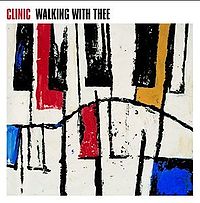
Before their stunted growth in the mid-2000s, Clinic was one of those bands that actually mastered their strange assortment of influences, rather than being ruled by them. They established a sound that was effortlessly irreverent, a kind of controlled schizophrenia spelled out by distorted clarinet, pulsating organ and, save for a few exceptions, trim drum patterns. Instead of assuming the presumptuous mantle of mixed media party host, the band traversed fog-addled forests of the subconscious to carve out a niche - regardless of the historical or contextual fallout.
Walking With Thee highlights the band's ability to create darkness as viewed through a lens of cryptic abstraction. The album comes off much like those 3D holographic cards that you tilt to see the image change, the only difference is that in place of the rainbow refraction is a monochromatic white to gray to black, all stabbed through by windows of pale teal translucence. Where as their debut album, Internal Wrangler, was a swatch - turning from glib folk tale, to bittersweet eulogy, to cheeky social commentary - Walking With Thee presents a distinctly bizarre winter.
Aside from the opening track, "Harmony", the album is chalked full of revolving-door lyrics that make pinning down a respectable interpretation difficult. On "Harmony", singer Ade Blackburn proclaims in his high-register croon, "I believe in Christmas eve/I believe to trust one's free/I believe in happiness/no one living with regrets/come fill yourself with dreams", which is a clear, albeit, resigned call for the goodness in all people. While the lyrics in the song are uncharacteristic of the rest of the album, "Harmony" comes off as a sort of shining gate, standing before the specter-flown landscapes of the rest of the album. It's not that the song is stylistically different - the clarinet, punctuating keyboard and simple house drum rhythm are right in line with the rest of Walking With Thee - but it's optimistic lyrics push it into a reverse-Pixies scenario, where the words are kind and the music is ominous.
The album's most successful hit, "Walking With Thee", is an organ-grinder with clashing drums and Blackburn's paranoid librarian delivery. "As you climb up the stairs and come back forever/Summer's in the house, untamed it was" warbles the singer, following it up with a repetition of "walking with thee" in the chorus. Fuck knows what Blackburn is referring to, but the imagery in the lyrics and the rough delivery of the music provides a creeping, jerky stop-motion animation for the mind, something involving inanimate objects coming to life. Which is convenient, because the music video for the song chooses exactly such a visual representation. When the singer cries out repeatedly, "no, no, no, no", any semblance of knowing what the song might actually be about goes completely out the window.
The nocturnal sway of songs like "Mr. Moonlight" "The Vulture" and "For the Wars" prompt you to travel to otherworldly beat cafes - far, far away from Earth. Everyone snapping their fingers and rolling their shoulders in hypnotized unison, not knowing if they are waiting for an ending or a beginning. Murals of spattered blocks, undefined triangles, cubed self-portraits, still-life lamps and fruit turned into precocious beasts and random phrases litter the sparse walls. It's a place in your mind you can't quite find, but also a place that is undeniably there.
Walking With Thee also pulls upon the sparse, acid guitar lines of spaghetti western soundtracks, mashing them into the ramshackle repetition of krautrock. "Welcome", "The Bridge" and "Sunlight Bathes Our Home" all feature jittering drum lines that have distorted, lightly reverbed guitar ribbons strewn across the top. Add in the permeating ghost of the clarinet, and the idiosyncratic haunt comes on quite strong. The songs act as a textured counterpoint to the pensive night meditation of the album's other half.
After writing all of this about the album, I've come to realize that there is a disjointedness to Walking With Thee that is definitely noticeable, but altogether unimportant in the record's enjoyment. It's because there is a roundabout cohesion, like a collage of unrelated pictures and trinkets that just -works- when you see it. Even "Pet Eunuch", which stands alone as a blast of needling punk rock, somehow fits amidst the minimal genre film soundtracks and dark jazz fusion. Walking With Thee is much like a stream-of-consciousness writing exercise, basking in the unassociated associations that arise out of letting the mind loose. With Clinic, their minds found a playground in music, and though the album comes off quite serious, there is always a lingering grin behind each furrowed brow.
Thursday, August 2, 2012
I Break Horses - Hearts

I'm sure many people think the dreamy side of Scandanavia has been staked unequivocally by The Ravonettes. For over a decade, the band has created guitar lines that surf their way through wide glass corridors and down avalanches of wild distortion. They have fused together demure harmonies (male/female, which is hard to tell without having seen pictures of them) that come off with a rueful sweetness - like a lover that kisses you and sticks a cigarette in your arm at the same time. But a new wind blows stronger out of the Svensk region - one that is altogether more nocturnal, saccharine and chilling. That frosty gust goes by the name of I Break Horses.
The duo's debut album, Hearts, is a textured glob of washed out melodies and chiming synthesizers, kept in line by pulsing bass drum and stilted snare breaks. Both exciting and distant, the album is reminiscent of a bittersweet relationship caught in an iceblock - the memory of which is darkened by the passing of several years. A cherished memory, but a resented one all the same. Always outlined by luminous pearl white, but always filled in with an inky, obscuring midnight-green. "Winter Beats", which confidently announces the band's existence, shimmers across an ocean of arpeggios, while singer Maria Linden floats just above the surface. Half the time it's too difficult to tell what she's singing - her low, hushed murmurs only reveal a few words in each line. It's almost as if Linden is talking in her sleep, recalling to herself more than anyone else.
Frankly, it's a gorgeous aesthetic. I Break Horses' particular lack of clarity is what makes their debut climb head and shoulders above the competition. There's a desperate intimacy here that most bands can only dream of achieving. Riding along on a crest of distorted synth lines, pushed out again and again, the band never allows you complete surrender, but they also welcome you into their arms, half-asleep, longing for an embrace. The breadth of Hearts is so sullen and anxious, exemplified on "I Kill Your Love, Baby!", where Linden softly sighs the mantra, "I kill your love/Kill your love, baby". I can only imagine this is a kind of inverted anthem for the resentment of waning desire. The relationship has run its course, the passion has gone out. Now all that's left is a slow, selfish death.
My personal favorite of all the songs on Hearts, even though they're all very good, is "Cancer", a slow-build of white-light synthesizer chords and a repeated guitar note ticking away underneath. Linden moans along, almost encouraging the synthesizer to keep going. It all culminates with heavy snare bursts, cascaded over endless cymbals. To me, "Cancer" personifies what the album is all about. It comes off like a eulogy, not only for a love lost, but an expectation never met.
I Break Horses leave all these calloused memories undulating at the mercy of their ocean. Hearts is not an album of answers, and the band never makes any pretense about that. The disenchantment of love and trust is implied, but it's delivered with such a somber resignation that any potential cynicism is disarmed. Foremost, the album is about the glue, the stitching, the nooks and the crannies that exist between our memories and how we perceive them. The space between what we felt we deserved and what we actually got. It is an area where insecurity and satisfaction go hand in hand - a place which only music can adequately describe.
Wednesday, June 27, 2012
Julia Holter - Ekstasis

Amazon is kind of like that drunk friend whose waaaaaay too into music, tossing suggestions at you with only the vaguest of guidelines and a misguided sense of altruism. They know about so much music at once, that any suggestions are destined to be too broad to make much sense. A little sense, but not much. Oh, you like the Pretenders? You might like Aerosmith, too. Oh, you like Aphex Twin? You might like Slipknot, then. Oh, you like My Bloody Valentine? You'd probably like ABBA. If you think Siouxsie and the Banshees are good, just wait until you hear KISS!!!
Those are all real suggestions I've gotten from Amazon. I don't fucking know, either.
Most comparisons aren't logical in any immediate way, but hell if Amazon doesn't claw and scratch to connect those oh-so-distant dots. Of course, blind chance has to win out eventually (based on the law of averages) and, if only briefly, the website finds its moments of triumph. Every now and then, Amazon haphazardly delivers up a gorgeous suggestion that falls right in line with your particular taste. One that recently befell my "Recommended for You" page was Julia Holter's Ekstasis.
If you can imagine a fancy arisocrat's hedge maze, complete with classical statues and ornate fountains, sporadically being dragged into a deep black vortex, then you sort of have an idea of how Ekstasis plays out. It's an album that finds a strange grace in the chaos of vocal samplers and stream of consciousness song structures. You can tell that Holter enjoys the austere beauty of an ambient soundscape, but she also likes to chide and tease every once and a while.
In a sense, Holter is the fanciful young woman you find yourself playfully chasing through the hedge maze. Statues float by and crumble in her wake and ghostly versions of the singer appear randomly, her gentle vocals sweeping past in every direction. The album's enigmatic opener, "Marienbad" unfolds like a chamber choral performance, swirling organ and Holter's overdubbed vocals filling in the empty spaces. The lyrical content, as glib as it is, most likely references Last Year at Marienbad, a classic French New Wave film (one I personally hate) about a couple at a chateau comparing themselves to statues: "I can hear a statue/wonder why they're so still/all day in the garden", at least, I think that's what she's saying. It's hard to tell throughout much of the Ekstasis, because, as I said, Ms. Jules likes to be a bit of cheek. The way she cuts herself off and allows her overdubs to float up to the surface is her way of grinning widely and saying, "I dare you to read into this."
"In the Same the Room" is pretty much the closest thing to a traditional "pop" song Ekstasis has to offer and even then, Holter makes sure to loosen the reigns and see where her subconscious garden may take her. It may start out with a meditative organ and straight-ahead drum machine, but the structure is slashed with flourishes of her angelic overdub and briefly careens off the cliff into a plume of whistling and vibraphone.
Of course, her sense of humor and beauty shines the brightest on "Goddess Eyes I". The song is a vocorder mantra of sorts - Holter's effects-laden vocals wavering through like a depressing future Calvin Klein ad stuck on repeat, "I can see that the eyes are not alive to cry". The singer soon adds unfiltered vocal booms to extend the melody out in a strangely exciting way, showing that she has a rueful credence for the decorum in her hedge maze. The inevitability of the black vortex entices her, but the defacement of the garden disturbs her all the same.
It all works because the album isn't really about cohesive narratives or well-articulated ideas, as much as it's about the feelings and placement her music puts you in. Her strung-together phrases and helter skelter synthesizer arrangements evoke an amorphous sense of calm (like any good ambient) but also inscrutable mystery. Holter's lure into the hedge maze of Ekstasis may be forboding, but amidst the tall green walls, stone gazebos and Greek statues that litter the garden, there is always a presiding serenity. The singer wants you to embrace the vortex, but to never let go of your bearings.
Sunday, June 3, 2012
Wild Flag - Wild Flag
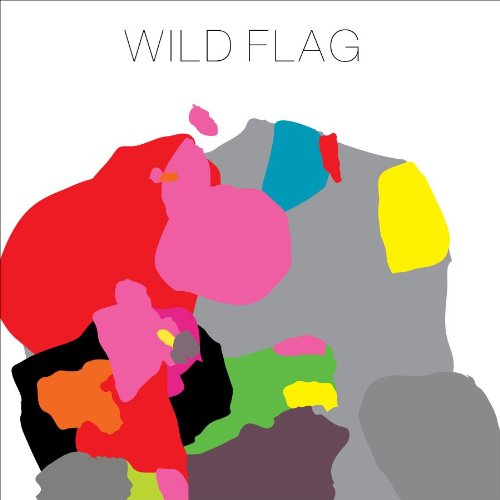
If you're looking for the musical equivalent of four howling women on a mean, smoke-pluming bulldozer, blasting through house and storefront alike, Wild Flag is a band for you. Their self-titled debut is both a soul-shaking and oddly tender experience that leaves you constantly scanning the horizon for the band's next swing around on their audio-dozer express. It's an energy that few bands these days can seem to match - not just in the powerful growl of their guitars or the reckless tempo shifts or the schizophrenic vocal delivery, but in the way these ladies apply the intricacies of melody, invention and texture.
Featuring a line-up of '90s indie rock darlings (Sleater-Kinney, the Minders and Helium) the ladies of Wild Flag are well-practiced in their craft. After years of juggling projects, shifting members, forays into other media (Carrie Brownstein and Portlandia), Wild Flag finally emerged from the chaos back in 2011, with a record to match. The immediacy and, perhaps desperation, felt on their debut points to a sense of ultimate release, a sonic boom of creative energy that had been building up for years and years.
The opening blast of love-struction, "Romance", sets the tone quite nicely. With it's slightly detuned guitar chords jittering on and off, singer/guitarist Brownstein offers a rubbery barrage of earnest desires and admissions. Though it's never clear who she's talking about, she is singing in the personal "my" but also the collective "we", so you get the sense that the band was in full support of the song's message. She sings lines like , "Hey, you fill up the spaces, those empty places/the corners and cracks/you kill my sickness, my only witness/you're all that I have" and "We love the sound, the sound is what found us/sound is the blood between me and you". For me, "Romance" stands as a defiant optimism for love in the face of an increasingly cynical world, with music to glue us together. Or just loving music. Or both. I can definitely get behind any of those sentiments.
"Something's Come Over Me" tones things down just a little bit, shifting their dozer into second gear, with measured guitar notes and singer/guitarist Mary Timony's gentle, reassuring delivery. Timony sings of anxiety, "Something's coming over me/got a fever now/I can't breathe" and "Let me ask your advice/if I fall once/will I fall twice?", with music to cure what ails, "Oooh, oooh, oooh, I hear you comin' through my stereo". The song is quickly followed by a hard thrust forward into "Boom" and the stop-start epicness of "Glass Tambourine".
Throughout the album, you can tell the ladies atop their bulldozer are choosing their targets carefully. Once sighted, it's only a matter of choosing whether to crush it with love, cheekiness or resentment. Sometimes all three at once. "Future Crimes", with it's distorted keyboard melody, yearns for an end to some severe hypocrisy. Brownstein wails over and over, "if you're gonna be a restless soul/then you're gonna be so, so tired/if you're gonna give up on this fight/then i'm gonna call you a liar", cementing the idea that the band, despite their rip-roaring veneer, can be achingly sincere. "Racehorse" is a great use of humor to critique the pitfalls of greed. With a smart-assed confidence, Brownstein sings, "I'm a racehorse/yeah, I'm a racehorse/put your money on me", followed by a purposefully crass chorus, "we're in the money, we're in the money".
The band see's no point in making their delivery any different, regardless of the sentiment behind it. Every emotion is a force to be reckoned with. Perhaps the song that best encapsulates this is "Short Version". From the off-hand guitar flourishes to the intense drum fills, you can tell the ladies are cackling loudly as they doze around, kicking their legs off the side in joyful reverie of their destruction. Brownstein yowls off enigmatic phrases like, "Inside this stillness is a wave/a force from which we cannot be saved" and "Inside this heaven is a hell/under this fever we are well".
Eventually, one of the guitars gets stuck on a particularly juicy chord, repeating it over and over, as the other begins to fly high, arpeggiating notes until the cows come home. The band yells in unison, "Okay! Alright!", bringing this soiree of pure energy to it's boiling point. Wild Flag's audio-dozer has shifted to full speed and you can't help but gleefully hang on for dear life. And that's true of the entire album. It's a rough, gratifying ride through the passions of life, navigated by earnest and vibrant women. That's a trip I will gladly take for years to come.
Monday, May 14, 2012
The Passions - Thirty Thousand Feet Over China
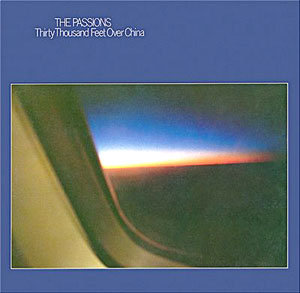
Music from the far corners of the past can surprise you. That is, if you're willing to seek it out. I was reminded of this lesson, when I discovered The Passions last week. I had come upon them by chance, finding their name relegated to a "similar artists" list for Siouxsie and the Banshees on All Music Guide. Scrutinizing the list and listening to some of the other bands, my hope was fading that I'd find a diamond in the rough. The list was populated by bands I either already knew about, or bands whose mediocrity was equal to their obscurity.
It's funny, because in situations like that, where you don't have much prior knowledge to go off of, your criteria for further investigation becomes strangely superficial. Sometimes I won't even click on the link to a band page just because I don't like their name. It's almost like the name itself is wasting my time - which is totally stupid - but that's exactly how I feel. Luckily, The Passions is an endearingly simple name for a band, so I overcame my ignorance and jumped right in to their discography.
I was immediately struck by Thirty Thousand Feet Over China, when I first fired it up on my computer. Cascaded with chorus-slather, echoing guitar and the cloudy vocals of Barbara Gogan, the album is akin to jogging through green mist, down a constantly undulating indoor gym track. The album has a silky, herky-jerk propulsion throughout, where smooth guitar notes float over a rhythm section that sticks fastidiously to reverse-engineered funk. It sounds like the typical recipe for a post-punk pasta, but The Passions pull themselves above most of their contemporaries by simple virtue of cohesive musicianship and energy.
"I'm in Love with a German Film Star", which was the band's one hit before disbanding, opens with some of the richest guitar chords you'll ever hear in your life. Gogan sings, "I'm in love with a German film star, I once saw in a bar/sitting in a corner and in perfect clothes/trying not to pose/ for the cameras and the girls", making no bones about the ridiculousness and inevitability of celebrity obsession. On "The Swimmer", the band misdirects with a slow build, muted guitar echoes and reverse snare splashes, which give way to a rapid guitar flourish. The drums and bass are dragged in tow, while Gogan moans so smoky and rich over the top of it all.
There's a presiding sense of controlled experimentation and indulgence throughout Thirty Thousand Feet Over China. You can hear it chattering on the reverse snares and elongated jam of "Small Stones". You can hear it squeal in the synthesizer highlights of "Runaway". You can hear it sway in the echoed percussion and the flange-muffled tremolo of the guitar on "Skin Deep". You can hear it mince up songs at the beginning and toss songs off at the end. It's a looseness that feels right. Since The Passions' music is a fundamental mix of smooth and groove, any probes into studio trickery are welcome eccentricities, rather than tedious subversions of pop song craft like many other post-punk acts.
Thirty Thousand Feet Over China is not going to change your life or set your ears on fire, but it is a solid album by a band largely forgotten by time. In many ways, the album is a sort of foamy, midnight lullabye, where even the expression of anxiety or disenchantment sound like sweet little nothings in the ears. The Passions may ask you to jump aboard the mood-train, but their skill at constructing songs and weaving in gentle melodies keeps your perspective sober. Overall, the album is a very fine effort that speaks directly to how unfair the amnesia of music culture and history can be.
Friday, April 6, 2012
Pizzicato Five - Made in USA

Pizzicato Five were one of those groups that consistently put out solid albums, yet never went out of their way to create a record of pure ecstasy. In a sense, you could say they managed their creative pizza well, dividing pieces equally across the table - years and years of decent albums, rather than making one or two amazing albums and foddering the rest.
There is a sense of exuberance that has been touched upon by several Japanese music artists from the '90s onward, but none do it quite as cool as Pizzicato Five, and Made in USA is a decent form of proof. It is Matador Records' first compilation of singles and other outstanding tracks pulled from the group's mass career in order for them to properly become acquainted with the U.S. The group's jet-setting '60s image and sound-collage-meets-drum n' bass-bossa-nova style are so effortlessly presented on Made in USA, that even the most heart-hardened listeners would have trouble not cracking a smile at the charm and glitz of it all.
The compilation opens with a breezy jazz shuffle, "I", that instantly transports you to a high-fashion club in swinging '60s Tokyo. Amidst a playful flute and snare swishes, singer Maki Nomiya provides anxious vocal melodies. You can tell she's ready to kick this groovy little set list off with a bang. As the album shimmies forward, the club shifts rapidly into the future and back to it's respective present, snatching up technology and music trends all over the place. "Magic Carpet Ride" introduces a cheerful middle-eastern flavor - synth flute wrapping itself around an electronic drum beat as Nomiya expresses some sweet idealism, "everyday we'll love together/we can make it last forever/ magic carpet ride/magic carpet ride".
"Readymade FM" offers a brief collage of radio jargon and background music, fading quickly into the saccharine chimes of "Baby Love Child". I would argue that "Baby Love Child" is one of Pizzicato Five's best songs, if not THE best. Woven into a measured acoustic guitar, an endless drum loop and punctuating xylophone, the song is a surprising evocation of affection. Nomiya's gentle delivery, which shifts between English and Japanese, is the icing on the sentiment cake, with lines such as "When we kiss, I see what's in your heart/you love me, yes you do/you don't need to tell me", outlining the one-two gooey punch, "we are in love, baby love child/I take you so high, baby love child/give me a kiss, baby love child". It's a song that makes you misty and nostalgic in the best way possible - hell, they even used it at the bittersweet ending of the Futurama episode where Leela first finds out about her true origins.
Made in USA is about possibility and positivity - ideologies that Pizzicato Five championed throughout their entire career. For them, music was both a cure for the soul that ails and a statement of nostalgic fashion as new-found empowerment. Made in USA exemplifies these ideas. It's a radio dial of effervescence - whether you find comfort in the intimate Japanese dialogue of "This Year's Girl #2", chill out to the cool blue groove of "I Wanna' Be Like You" or flail around to the celebratory bombast of the popular single, "Twiggy Twiggy-Twiggy vs. James Bond" - it's a ready-made sound collage of the most adorable proportions.
To some ears, Pizzicato Five may seem ham-fisted and corny. Made in USA is not going to completely convince them otherwise, but it may just give them pause. Being a compilation, the record does suffer from a lack of continuity, even within the typically disparate aesthetics of the group. "Sweet Soul Revue" and "Go Go Dancer" tread a little to close to the chin with their overblown horn sections and flat song structures. However, it's not enough to sink the ship. The brightest moments of Made in USA send the compilation to the stars, encouraging anyone who is curious about Pizzicato Five to gleefully peruse their back-catalog.
Thursday, March 8, 2012
Siouxsie and the Banshees - The Scream

When you think about the world of down and dirty classic punk, you think of bands like The Sex Pistols, The Ramones, Patti Smith, The Buzzcocks, The Cramps, The Slits, The Clash, Iggy and the Stooges and so on. You don't necessarily think of Siouxsie and the Banshees. Siouxsie Sioux is usually pegged as the dark princess of theatrical goth rock (with a fingernail constantly swirling in post-punk), a label with total and undeniable merit. That is, except for her very first record, The Scream.
Before Siouxsie and company started ordering black eye-shadow and high-volume hair products in bulk, they were part of the sweaty and exciting punk scene of mid-to-late '70s England. Most of Siouxsie and the Banshees' early output is extremely direct, rapid and snarling - there are only a few leanings into the crazed, garish twilight they would later come to embody. After breaking out with their hit single, "Hong Kong Garden", the band's early efforts would culminate on The Scream in 1978, a vividly ferocious debut album that personifies everything I've come to love about punk rock and NONE of what I hate about it.
For me, The Scream is more than just an album. The Scream is a tangible summation of the grit and irreverence that punk music had initially promised. It's all deep red madness with golden smoke around it. Listening to it unfold is like watching a hulking, feminine tiger stalk it's prey, gore it to pieces and then chew sumptuously on the entrails. The album opens with a primal chant ("Pure"), in which Siouxsie and her band mates exchange revelrous moans, overshadowed by a heavy and slowly recurring bass tone. The intentions have been made clear - you're entering the hunting grounds. The band kicks up immediately with "Jigsaw Feeling", a hot red set of needles that tear into the skull, all the while Siouxsie announcing an inevitable mental deterioration, "One day I'm feeling total/the next I'm split in two/my eyes are doing somersaults/staring at my shoes".
"Overground" maintains the animalistic nature of the album, but it's in a more measured, brooding fashion. The guitar stalks slow and alone in the intro, only joined by Siouxsie's shrill confidence and a booming set of tribal drums halfway into the song. It's followed up with an inverted cover of "Helter Skelter" by The Beatles, which completely obliterates the original in terms of pure satisfaction and delivery. The band's version emerges out of the darkness, scattered bass notes and guitar screeches giving way to ragged energy. Siouxsie infuses the cyclical lyrics with an obstinate charm, like she's toying with her prey. She adds a very well placed swear, in the line "You might be a lover, but you ain't no fucking dancer", which pretty much trademarks the song solely for the band at that point in time.
There's a welcoming give-and-take when it comes to tempo changes across the album. Each song is basically a refresher for the last, giving The Scream infinite propulsion - you could literally listen to it back to back to back to back and never really tire of the succinct punk contained within. "Metal Postcard", with it's deranged bird-call guitar slides and the jittering chords of "Nicotine Stain" are another great example of this slow-to-fast alternation. "Metal Postcard" provides the punch, while "Nicotine Stain" provides the vigor.
Of course, it's Siouxsie Sioux's proud and defiant style that pulls everything through the looking glass. Her cautionary tales, examinations of human nature and all-out celebrations of the depraved push the nocturnal punk of The Scream into the territory of "unforgettable". She has this way of weaving evocative lyrics without handing everything over in exposition, sliding her vocals up or down as they hang on particular words. Passages such as "By hook or by crook/you'll be the first in his book/for an impaled affair" and "out of the frying pan/and into the fire/58th variety" on "Carcass" paint the imminent doom of some unlucky victim with just enough vivid description for you to fill in the spaces. On "Mirage", Siouxsie sings about the flat, relatively meaningless existence of sexual spectacle, particularly on TV, "I'm just a vision on your TV screen/just something captured from a dream", moving on to acutely describe the controlling nature of the spectator, "my limbs are like palm trees/swaying in the breeze/my body's an oasis/to drink from as you please".
When all is said and done, I feel that The Scream is so ferociously definitive that I'm glad the band (and it's rotating roster of musicians) went on to explore other arenas of music. Siouxsie and the Banshees could easily have burned out by clinging to their punk roots and producing some tired, sub-par albums along the way. Instead, they chose to evolve. The band didn't have a perfect track record thereafter, but their whirlwind career produced several fantastic records. The Scream is one of those records, and in my opinion, their very best. You can't tame it's animal style, and really, who the fuck would want to?
Thursday, February 23, 2012
PJ Harvey - Let England Shake
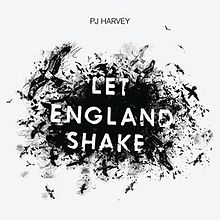
I have had a long-time crush on PJ Harvey and her music. In fact, once I get started, it's hard for me to shut the fuck up about how wonderful she is. The reasons PJ sits high, like a dominant queen, on my list of favorite artists are numerous: she's a raven-haired slink, a sexy cool lady with a huge mouth and a siren-call voice to match it, her equally self-effacing and empowered lyrics pull no punches, her employment of chunky guitar chords that constantly fold in on themselves is addictive, her shift from punk to blues to spindly folk is effortless, her everything, everything, everything.
It's not to say, in actuality, she's perfect and I just gobble up anything she dishes out, however. I've never quite understood the major wank-fest behind her third album, To Bring You My Love, an odyssey into an unscrupulous jazz/blues hybridization - all with a bit of dirty electronica thrown in to little avail. "Meet Za Monsta" is an interesting song, but it's not enough to save the experience. I've had similar feelings when listening to Harvey's work with John Parish. There's just not enough satisfaction in the songs or the concept, not enough pure PJ for my tastes.
So PJ can certainly do wrong in my precious ears, but it ain't likely. Her latest album, Let England Shake, ain't too wrong at all. It's a simultaneous send-up, sorrowful critique and love letter written to her homeland and, in particular, its troubled history. The album sounds like you are traversing the halls of an extravagant palace - the constant, echoing guitar like pristine white marble strewn across and throughout. Harvey is the downtrodden, wilting countess, showing you around sun-soaked courtyards and stately, gold-fringed rooms to paintings of England's proud loves, shamed atrocities, gorgeous landscapes and fervent loyalties. It's a distinct mixture of beauty and disgrace, and ultimately new political territory for Harvey to tread.
On the brass-punctuated, "The Last Living Rose", Harvey sings out matter-of-factly, "god damn Europeans/take me back to beautiful England", then goes on to describe her country with both wit and morbid effervescence, "and the grey, damp filthiness of ages/and battered books and/fog rolling down behind the mountains/on the graveyards and dead sea captains". Set to a translucent, rolling guitar strum, she mourns the terrors of war on "The Words that Maketh Murder", in the high-pitched moan she first adopted on White Chalk, singing, "I've seen and done things I want to forget/I've seen soldiers fall like lumps of meat" and "coming from an unearthly place/longing to see a woman's face/instead of the words that gather pace/the words that maketh murder".
Let England Shake is full of brutal irony and earnest misery, but Harvey does her best to keep things flowing, mainly by turning her history lessons into live demonstrations. The flow does taper a bit in the middle, especially during "On Battleship Hill" and "England", however, PJ's got a cure waiting around the corner with the intense guitar slide of "Bitter Branches" and the delicate piano ballad, "Hanging in the Wire".
Let England Shake is something that is obviously near and dear to Harvey. In an interview, she claimed that until recently she had never been confident enough to write politics and history into her lyrics, but had always wanted to. Perhaps now that she is older and has vented many of her past proximal demons, her liberation is complete. However, the evolution from deeply personal, raw narratives to expansive folk songs is definitely a major shift. Those who stick firmly to her ragged blue soul may find the album pretentious and beyond scope, but those who are willing to ride along on her artistic journey can find a lot to love about Let England Shake.
Friday, February 17, 2012
Charlotte Gainsbourg - Stage Whisper

Although Charlotte Gainsbourg has increasingly embraced the world of acting in recent years, she still finds time to reconnect with her showbiz roots and, subsequently, cuts a fresh music album here and there. Gainsbourg isn't necessarily the brains behind these endeavors, but she does apply her trademark hush-tones to music orchestrated and arranged by more indie rock stars than you can shake a bag of glass at, including Jarvis Cocker, Air and Beck.
Her latest album, Stage Whisper, is actually left overs from her previous record, IRM, which was largely the baby of Mr. Two Turn-Tables himself. It's particularly ironic in my mind, because I felt the material on IRM was uninspired, sloppy and too crazy grab-bag eclectic for its own good. Stage Whisper seems much more concise and in control of it's destiny - almost as if someone grabbed Beck by the shoulders and said, "STOP IT", loudly, right into his deadpan face.
Stage Whisper has far more stark definition to it, roaming from burning midnight discotheques to old, crumbling ballet and opera halls full of reverb. Gone is the lackadaisical baroque electronica of IRM, and in comes its darker, bittersweet sister. I would actually even go so far as to compare this "odds and ends are better than the prime cuts" idea to Radiohead's Kid A and Amnesiac. Most folks tend to get all rah-rah for Kid A automatically, but I've always found myself drawn closer to the trickled down bits of Amnesiac. It's definitely not as cohesive as its better-received comrade, but there is this exciting, palpable disjointedness that makes the album so much more interesting. So, while Stage Whisper may be full of second-string rejects, the underdog factor prevails, and the album is far more of a triumph.
You don't need to sweep your flashlight down the album's darkened ballet halls for long to discover irresistible trinkets like "Terrible Angels" with it's grimy pulsations and the nocturnal, inverted funk of "Paradisco". "All the Rain" tosses in some reverbed drums and ambient synthesizers, Gainsbourg's mouse-like delivery simultaneously providing a strange comfort and disturbance, like a bi-polar ghost, forever haunting decrepit passageways and stairwells of a once beautiful venue.
Of course, when the first chiming tones of "Got to Let Go" march into your ears, then you know you've discovered the long lost heart of the old hall. The luminous white-lit space of the song is a portal directly to the deeply felt rigors of remorse and acceptance. Gainbourg laments delicately, "you've got to be strong when they call it a day/got to realize when there's nothing left to say," then quietly dissolves with a wavering resignation, "good things come and go/one day you will know/you've got to let go". These aren't particularly deep lyrics but there is a profundity and smiling sense of loss to be found - the way the '80s keys tap along, the tight, echoed drum machine snaps and the singer's vibrantly diminutive vocals coalesce - there is real love in this song. Add to it a striking duet with singer Charles Fink, and you've got a fantastic little number dedicated to the heartbroken, the scorned, the neglected, the weary and everything in between.
I'd say the only thing this very solid album suffers from is a short track-listing. There are only 8 previously unreleased tracks on the album, the rest consists of throw-away live performances and remixes. You'll find that the proper portion of Stage Whisper is gone within a few short breaths and few flutters of the eyelashes. But the impact remains. The ghost has passed through you, in all of her make-shift tragedy and though she may never be at the forefront of your passions, she will always be around when you need her.
Tuesday, January 17, 2012
The Clash - London Calling

The Clash are one of those bands that most folks are railroaded into appreciating, kind of like The Beatles or Nirvana or David Bowie, because of the cultural impact they had on music during their heyday. Critics and fans alike beat you senseless with bludgeons of melodramatic praise and sometimes you can't help but blindly agree as their irrational (or skewed) energy seeps into your brain. I think it's fair to recognize (and respect) the significance such bands have drawn in the history of pop music, but I don't think people should confuse "respect" with "enjoyment".
So it is with The Clash, a band I certainly respect but cannot say I enjoy on any consistent level. People are always quick to point to their album, London Calling, as the band's definitive statement to the world. I remember buying the album strictly because of its reputation when I was in high school. I had the "if critics like it, then I should too" mentality going on strong back then. However, upon listening to the much-lauded record, I discovered a lot of inconsistency, as if all the songs didn't make much sense together, but might have been better off spaced across several albums, each dedicated exclusively to a chosen style. As it stands, the album is really just a series of anomalies.
"London Calling" isn't a terrible opener, with it's pulsating guitar chords and playful bass line, but it doesn't have the gravity that Joe Strummer clearly thinks it does. He groans out a series of implicit, rally-cry phrases like "Phony Beatlemania has bitten the dust", "London calling to the zombies of death/quit holdin' out as I draw another breath" and, of course, "London has drowned, and I live by the river". It's a song that critiques consumerism and the stifling of world awareness, but the midnight-punk music lacks enough power to hold it all up.
"London Calling" is followed closely by excursions into surf ("Brand New Cadillac"), lounge-lizard ska ("Jimmy Jazz") and straight-up reggae ("Rudie Can't Fail"). This is a jostling rotation of styles that conjures a feeling of uneasy disconnection. You almost already feel exhausted as The Clash sing "Rudie can't faaaailll" over and over at the close of the first chunk of the record. Then, in comes "Spanish Bombs" to knock your socks off in the right direction. The easy-going lead guitar is a hunky '50s pin-up, filled out by a quick and cautious drum beat. This bubblegum sound ironically frames the ultra political words by Strummer, where he teaches a violent history lesson. The song has this gratifying poignancy to it, thanks to the intersection of sweet melodies and horrendous lyrical imagery.
And the album seems to follow suit from there, a collection of strange influence-infused explorations that would become hallmarks for The Clash down the line, as well as tried and true punk rock anthems that jettisons the blood through your veins. London Calling sounds like a small old cigar box you'd discover by chance in someone's closet. The box would contain old war metals, pamphlets on radical liberalism, pictures of sun-burned vistas and grungy slums from far off places, pictures of old friends, lovers, pimps and thieves - and probably some leftover weed. It's a box that's interesting, but ultimately too jumbled to care about as a whole.
It's an odd sensation holding on to London Calling for so long. It's an album too sloppy to really get your hands around and too intriguing to get rid of. You feel the intensity in all of the songs, but the energy is too scatter-shot to be completely enjoyable. Palpable and righteous songs like "Clampdown" and "Train in Vain" are a perfect fit for the anthem rock archetype of The Clash, but at other times, such as the low-down reggae of "The Guns of Brixton", you can't help but feel how silly and ponderous they are. I can give credit to the band for stepping out of their tattered punk rock sneakers to throw a no-holds-barred soiree of world music, but when the overall direction isn't magnified, you're left with a bunch of good songs meant to be heard on a dozen different albums.
Wednesday, January 11, 2012
Love Inks - E.S.P.

On the surface, Love Inks' debut album, E.S.P. sounds a bit like a hipster dreaming of a girl-angel caught in a box. The Austin, Texas-based band employs that forward-moving chug of bass and oscillating guitar that has become synonymous with most indie pop and rock acts of the last 11 years. It's not necessarily an aesthetic that is devoid of value just because it saturates the market, but then again, it makes distinction an elusive attribute to obtain. It was only upon full listening that I discovered Love Inks actually do have the goods.
Stripping their sound down to guitar, bass and an analog drum machine, the band stand tall in the face of fashionable reverb and delay. The ambience in their music comes not from a layered wall of sound, but from the empty, hollowed space that stretches above them. "Blackeye" is a pristine example - it's a song that ushers you into a lovelorn diner at 3 in the morning. The mood is set by a gentle cycle of guitar notes and a consistent swish of drums. The soft-sold delivery of singer Sherry LeBlanc comes off like an inquisitive but compassionate waitress, "you've got a black eye on your eye/tell me was it from a fight" and the chorus, "did it happen last night?".
Throughout E.S.P., LeBlanc offers a lot of simple, repetitious lyrics with slight twists into cheek. It's a handy device that stems the tides of gushy sentiment and nostalgia. Instead, the album feels like a bunch of enigmatic stories told during a twilight drive across the Southwestern United States. You, naturally, are the driver, while LeBlanc mutters yarns on love, pain, indecision and surrealism in the passenger seat. The other band members sit in back, lazily strumming their instruments in time, making your moonbeam journey a gentle success.
However, E.S.P. isn't perfect and Love Inks find themselves taking two slight detours over the course of their 10 song set list. "Can't Be Wrong" and "Skeleton Key" push the album into more generic territory, with the chunk-flop shift of the bass in "Can't Be Wrong" and the spaced out chords of "Skeleton Key" evoking bands that you and I have heard over and over and over and over. It's a marked disappointment that effectively breaks up the flow of the album, like a shallow pothole surrounded by gleaming asphalt.
Despite this, I feel Love Inks carve out their quiet fire in a thoughtful and consequential way. E.S.P. isn't immaculate but it does point to a band looking to claw their way out of easy trends and shallow expectations. All of this, while retaining a style that they are passionate about and that accurately synthesizes the bright corners of their influences. Personally, I love the idea of a band embracing minimal music arrangement and still coming off as ethereal. It's a breath of fresh air in a market that is dominated by obligatory '80s synthesizers, cascades of delayed guitar lines, noise crescendos galore and humdrum female stand-ins. Love Inks may be lumped in with the recent rash of candy-coated girl bands, such as the mind-numbingly dull Dum Dum Girls, but it's important to not be fooled by lazy critics and publications (basically all of them), Love Inks have a potential all of their own.
Monday, December 12, 2011
Television - Marquee Moon

Marquee Moon is one of the biggest pre-cum albums of all time. After just four songs, Television blows its glorious load all over your face. The remainder of the album is exactly like post-sex exhaustion - it's unfocused, it's messy, it's completely flaccid. As the final guitar notes of the song "Marquee Moon" ring out and fade, you can feel a palpable sense of disappointment and inadequacy coming on. You were right there, on the verge of ecstasy, but -someone- got a little too excited.
I've had Marquee Moon rattling around the old music collection since I was a junior in high school. Several times throughout the following years, the idea of keeping it or selling it for like, maybe, four dollars became a point of serious contention. There was a lot of hemming and a lot of hawing and a lot of forgetting all about it, but ultimately I decided to keep the album. Those first four songs held on to me for dear life and now? Now I'm stuck with children I'm extremely proud of and illegitimate run-off that I'd just as soon put up for adoption.
The first half of Marquee Moon - "See No Evil", "Venus", "Friction" and "Marquee Moon" - is an absolute thrill. "See No Evil" and "Venus" feature a tornado of guitar chimes, which splatter and invert upon arrival at their respective choruses. "Friction" is a short but sticky blast of energy, while "Marquee Moon" is an epic ten-minute rock crescendo that rises, falls and finally soars, reaching an orgasmic cloud of guitar arpeggios. Singer and guitarist Tom Verlaine squeals out a heavy dose of magical realism to match the theatricality of the first four songs. He mulls over a drug trip, "Broadway it looked so medieval/it seemed to flap like little pages/and I fell sideways laughing/with a friend from many stages" on "Venus" and tests the fragility of existence, "life in the hive puckered up at night/the kiss of death/the embrace of life/there I stand waiting 'neath the marquee moon/just waiting", on "Marquee Moon".
And then, it's spent. "Elevation" is a deflated counterpoint to "Marquee Moon". It comes on so sluggish and weak, it's hard to believe you're still even listening to the same Television album. "Guiding Light" drags things down even further, slopping in a piano to fill out the drudge of a mediocre ballad. "Prove It" is the only song of the last four that even comes close to sounding interesting, but even it's sprightly repetition wears thin after about a minute and a half. Finally, you have "Torn Curtain" which has one of the most annoying refrains that I've ever heard on a classic rock/classic punk/whatever album. When you hear the entire band sneering, "tears, tears, holding back the years" you'll know what I mean. They bring back the piano to reinforce the exhaustive guitar solos, trying their best to close out Marquee Moon in full poignancy, but it all just sounds lethargic and uninvolved.
It's funny, some might argue that, after the first four songs of Marquee Moon, the rest of the band's career was ALL post-sex exhaustion. I can't speak entirely well to that point, although I did find their sophomore album, Adventure, to be extremely dull. I do know, however, that Marquee Moon is too inconsistent to love and too interesting to ignore. The frustration from this duality has lead me to rarely listen to the album at all, yet I think I will always keep it around to remind myself good songs on subpar albums deserve as much affection as I can muster.
Friday, November 18, 2011
Justice - Audio, Video, Disco

Ever since their arrival on the international music scene in 2007, many people have shafted Justice as a slightly rough-around-the-edges clone of Daft Punk. It's a sentiment that's not completely without merit: both groups are French, both are duos, they're both lovers of disco, funk and house music, they both relish in the gurgling buzz of the "Saw" preset found on basically every synthesizer, they're both fans of CD-skipping chord progressions and so on. However, I think people fail to realize that, while Daft Punk massively popularized that particular sound, it doesn't mean it belongs strictly to them. No, Justice and Daft Punk are merely cut from the same initial cloth.
It would be one thing if Justice sounded completely derivative of Daft Punk (who themselves borrow heavily from '70s funk groups), like that gross watered-down Dr. Pepper you get at Burger King when the soda machine hasn't been refilled in a while. But Justice manage to carve out their own stellar direction - just look at their debut album, Cross, for proof. It's like listening to an epic biblical film with God spinning some fat funk behind his monstrous decks. The album gradually sling-shots all across the ages, everyone and everything caught in a thick, groovy vortex of gold-dust and thunder.
Cross is an album that has something to say. It says, "dance music can be fun AND somewhat conceptual." Even the pretentious biker-bar hipster look that both members (Gaspar Auge and Xavier de Rosney) adopt cannot derail or muddle the sheer power of their debut. Which can be a curse in disguise for a lot of artists, because, how do you effectively follow up on such greatness?
Justice make an admirable attempt with their new album, Audio, Video, Disco. I can't say that the album is perfect back to front, but I can say that, even from the outset, it serves up bombastic energy and synthesizers tossed into an abattoir. What's funny is that Audio, Video, Disco wouldn't be out of place at a progressive rock concert, what with the theatrical structure of songs like "Civilization" and "Ohio" and the multi-layered melodies of "Cannon" and "Brianvision". Through the course of the album, you get the distinct sensation that Justice could open for Rush (but not Dream Theater because they're awful) and the audience wouldn't immediately default to a "what the fuck is this?" mentality.
I also got the distinct sensation that I was watching an early '80s post-apocalyptic science fiction movie, probably starring Harrison Ford - oh, fuck it - I thought of a movie like Blade Runner. Not Blade Runner itself, but something similar to it. A cult classic that's waaay better than Blade Runner. The album seems to have this noir gospel quality that points towards rear-projected advertisements, dusty cityscapes and burning barrels. I guess "Civilization" is the prime song to target in this metaphor, with it's sliding distortion patrolling the streets and the duet of pulp-ified rebel yells, all for a future promised but never delivered.
It's important to keep in mind that Audio, Video, Disco never becomes too serious or up it's own ass, though. The album is above all groovy and intensely catchy. Just listen to the smoothy-bear hook on "Ohio" once and you'll be singing it in the shower, in the car going to work, at work, at dinner, while brushing your teeth, before you go to bed - those harmonious vocals and that playful bass line just won't leave your head. Lucky for you, it's a song you can be proud to have stuck on repeat in the old noggin.
Sunday, October 30, 2011
Austra - Feel It Break

It's a personal victory for me when I'm able to find new music that I genuinely feel I will be listening to 5 years down the line and beyond. So many people fall into this vicious cycle of gratification and disposition, where they'll obtain an album, play the shit out of it, fall in love with it, be distracted by something else that's newer and completely forget about it within three months - rinse and repeat. I think that a number of exposed, overexposed and underexposed music artists are accommodating this behavior by making music that, while initially serviceable, is found dead and mangled on a barge in a New York City river not long after the music's introduction to its audience.
This idea, I feel, supports my theory that a lot of music - popular and unpopular, past and present, across the spectrum of genres - is not necessarily -bad-, it's just boring. Which is just taking the long way around to being bad again. Why is it boring? Because, wittingly or unwittingly, it was made to be boring. It's boring with a hint of enjoyment - just enough to deceive you into feeling something kindred with the album. This is so you can apply some transient meaning to otherwise life-shaping events, like that shitty relationship you're in, or that elation from getting promoted at work, or that ramble-on road trip you always wanted to take from Columbia, Missouri to Pasadena, California.
But this particular music never sticks around. You won't fondly look back on it, you'll think about the experience by itself. The spell of that music will have long since dissipated, as the endless roulette of new artists and bands spins onwards and onwards. I feel like I know myself well enough to proactively avoid these kinds of groups and save my time for something I find to have personal and preferential longevity. That doesn't stop me completely from being snake-oiled into liking certain cardboard artists, but I do try. Regardless of whether or not you feel that the last three paragraphs are the rantings of a pretentious twat, I think we can all appreciate the idea of an artist or band sticking with us for the long haul, like a devoted friend, through the ravages of taste and time.
I've been having that very hum of assurance with a small-time (working towards medium-time) Canadian group called Austra, who recently released their debut LP, Feel It Break on Domino Records. The first song I heard from the album was the single "Lose It," something I initially didn't know what to make of. All these cacophonous women singing over analog synthesizers and 808 drum machines - I felt that maybe it was just fodder for current aesthetic trends. Big mistake. The seed was planted in my head, I couldn't stop thinking about "Lose It" for weeks and eventually I listened to it again. The way vocalist Katie Stelmanis delivered desperate lines like the recurring "don't want to lose you, don't want to lose," and "I get impatient with every word/ the more you ask me, the more I've heard," over punctuated analog synthesizers sent the most electrifying chills down my spine.
And, honestly, the rest of Feel It Break follows "Lose It" in mystifying glory. Traveling to these deep, dark woods that Austra has created is a journey into a foreboding place. A place where pale green light shimmers through the openings of dense, intertwined branches. It's almost as if Stelmanis and the Tasseomancy twins are three seductive witches, conjuring vast amounts of reverb and electricity to ensure that you never leave the forest again. The album has a very distinctive tug and pull between obsidian gothic and buzz-saw groove that is nigh impossible to resist, especially on repeated listenings. Songs like "The Beat and the Pulse" and "Spellwork" suggest that, although the forest is possessed, the spirits know how to get down and shake a leg.
Yet, the album retains a sense of gravity by conveying memories of anguish, likely to do with precarious, wavering relationships. On "The Beast", Stelmanis speaks on emotional liberty wrought by relational expectations, singing "The morning I was born again, I was made into a beast," and "Am I free now, am I at peace/Is that the ground below me or your feet?" built up with a rolling, grandiose piano.
Other songs highlight strands of abrupt backlash, where Stelmanis weaves phrases like, "I want your blood, I want it in my hair" on "Shoot the Water" and "Feeding on bones or anything grown," on "Spellwork". There's also, "I came so hard in your mouth/I saw the future, it was dark," on "The Future", which may be a playful (or resentful) allusion to oral sex, and if it is, bravo to Austra. It was a genius move fitting a blatant but engaging line into such operatic music.
In the end, Feel It Break is a strange, bewitched offering of nocturnal ritual dances and spectral tone-poems, an album that works its electro-magic consistently from front to back. There isn't a weak link in this chain. Austra's debut, in my eyes, is a testament to the merits of unfiltered genesis. It's music that has the distinct potential for sticking around despite the boring music that constantly out-surrounds them. And I couldn't ask for more than that.
Sunday, May 8, 2011
The Kills - No Wow

The Kills are a strange little dish. They aren't a band I can wholeheartedly embrace and they aren't a band I can outright dismiss. I initially became interested in them when I heard the luminous growl of "Monkey 23" strutting around during a night-driving scene in The Beat That My Heart Skipped. The song was so complimentary to the lush visuals of the film I could have sworn it was recorded explicitly to be placed in that scene. It wasn't until later on that I found out the song was part of the duo's debut album, Keep On Your Mean Side.
Imagine my disappoint when I discovered that none of the other songs on the album sounded even remotely like "Monkey 23". The rest of Mean Side is bogged down by tiresome riffs and smokey vocal moans that don't leave much of an impression. I felt especially insulted because they enticed me with such a nice piece of candy, just to pad it with heat-soaked Crasins. Needless to say, I left The Kills high and dry. I didn't touch, taste, smell or think of them for numerous years to follow.
As the years went on, I began to wonder what happened to the pair. Did they burn out? Did they evolve into something ridiculous? Did those comparisons to the White Stripes drive them to suicide? It turns out that only one of those things happened. They became ridiculous. But not before they made a tight, snarling collection of songs that blew me so far away that I'm still trying to figure out where I landed.
No Wow is like a brief, hard slap in the face. The exact kind of slap that comes from a jilted lover. With the methodical pitter-patter of a subdued drum machine in the background, guitarist Jamie Hince fires off palm-muted clicks, roaring hammer-ons and thick, thick, thick chords. That masterful touch of controlled reverb and tone-doubling found on tracks like "Love is a Deserter" and "Murdermile" provides some authentic satisfaction. Imagine an electric guitar combined with an air horn, shrunk down and thrown into a glass jar filled halfway with sand. That's the sound of The Kills in this particular instance.
Throughout the album, Alison Mosshart groans out curtailed, skinny-white soul. It's a just-right mix of deep attitude and melodic mindfulness - something that many other lady singers (both popstars and indie darlings) tend to forget as they drown themselves in vibrato and general fat-assery. Mosshart's lyrical imagery is cool, dark and dangerous - on "At the Back of the Shell," she sings, "kiss all your fingers, what's that for?/ you'll never get to heaven with your shirt all torn," then wheezing in the chorus, "it ain't such a thrill." It's clear that she wants to be cryptically hip, but it works through the entirety of No Wow. There's a lot of murder, sex and guns that come out of Mosshart's mouth and it works with the sleazy sensuality that the music conjures.
I suppose the best way to look at No Wow, is a brief but powerful moment of genius by a contemporary rock act that sort of fell back into the sea of mediocrity once the album was done. Honestly, it's giving The Kills a lot of credit - many, many, many bands these days can't seem to work their way out of superficial expectations to make a decent rock album, let alone several. The Kills pulled it off, though, and they should be commended for that.
Saturday, March 26, 2011
Nick Cave & the Bad Seeds - From Her to Eternity

It took me a long time to really understand what the big deal with Nick Cave was. For several years, the towering Australian with impossible, tall black hair was at the peripherals of my music vision. I paid him no mind, even when people would mention him. All I knew was that he was a music fixture. He was one of those draped monoliths, the kind you don't bother to uncover even though you always feel like you should.
I had then received a number of his albums from a friend. I don't know if it was the fact that I got so many at once or that my ears wanted something different, but nothing really stuck to me. I even saw his performance in Wings of Desire. Interesting constructions of noise and storytelling, but nothing slap-in-the-face profound. About a year later my friend tried once again, giving me remastered versions of two of Cave's albums. I took them home and gave them both a hard listen.
It was at this point that Cave and his Bad Seeds finally, after years of indifference, broke through. It was in the form of From Her to Eternity. It's difficult to describe why I became taken with this jagged, broken antique of an album. I suppose it's because the execution of the pounding instrumentation and the venomous lyrical moan are handled with equal care. On repeated listens, I found it impossible to resist the door-thud bass and crumbled distortion of "Cabin Fever!." The way Cave desperately wails, "The captain's forearm like bunched-up rope, with Anita wrigglin' free on a skull'n'dagger, and a portrait of Christ, nailed to an anchor etched into his upper...," it snared its way viciously into my ears and, this time, I thoroughly enjoyed the torment.
From Her to Eternity plays out like some sort of condemned cabaret. Cave is the serpentine host, spinning the fates of unscrupulous and destructive individuals. His sneer is so apparent that it could be mistaken for revelry.The Bad Seeds dance a chorus line in the background, providing jaunty slabs of noise from broken pianos, jackhammers and glass. The title track is particularly ragged, Blixa Bargeld's gravel-mixing guitar spilling out as Cave sing-talks, "And she is shinning it down the vine, out of her nightmare and in to mine".
I feel like From Her to Eternity exemplifies what it means to successfully integrate the aesthetics of noise and found sounds into well-told rock music. Dissonance is a fickle mistress but when married to a strong story and an undeniable presence, it can be one of the most worthwhile things you'll ever hear in your life.
Subscribe to:
Posts (Atom)